Hydrogen Fuel Cells: The Smart Solution for Grid Reliability and Business Performance
The U.S. electric grid is under unprecedented pressure. Rising and concentrated electric demand is pushing transmission lines to their limits, while extreme weather events and unexpected spikes in industrial consumption are testing a system that wasn’t built for surprises. And the grid can’t keep up—every storm, every heat wave, every new data center continues to test its limits.
This winter’s repeated storm activity has offered a clear reminder of that fragility, with wholesale electricity prices in some regions at times surging above $1,000 per megawatt-hour compared with an average of just over $50 during the first nine months of 2025. At the same time, natural gas prices, a key driver of power generation costs, have experienced significant volatility, at points more than doubling from their 2025 averages, further compounding pressure on energy markets.
Impact on Businesses Worldwide
These pressures aren’t abstract; they’re a daily reality for grid operators and businesses alike. That reality is especially evident in the rapid growth of large-scale distribution centers and industrial facilities operating at peak capacity — meaning periods when electricity demand is at its highest due to full production schedules, equipment usage, and battery charging cycles occurring simultaneously.
Plug has worked closely with its customers to analyze operational data of Plug’s fuel cell products and found that large distribution centers can draw upwards of 2–5 MW of electricity with battery operated forklifts during grid constrained periods, particularly during battery charging cycles aligned with industrial shift changes. When this demand coincides with system-wide peak or high-stress events, transmission constraints intensify — driving price volatility, increasing reliability risks, and in extreme cases, raising the potential for electricity outages. The graph below shows how one facility’s demand changes throughout the day with charging and how that impacts their electricity charges.
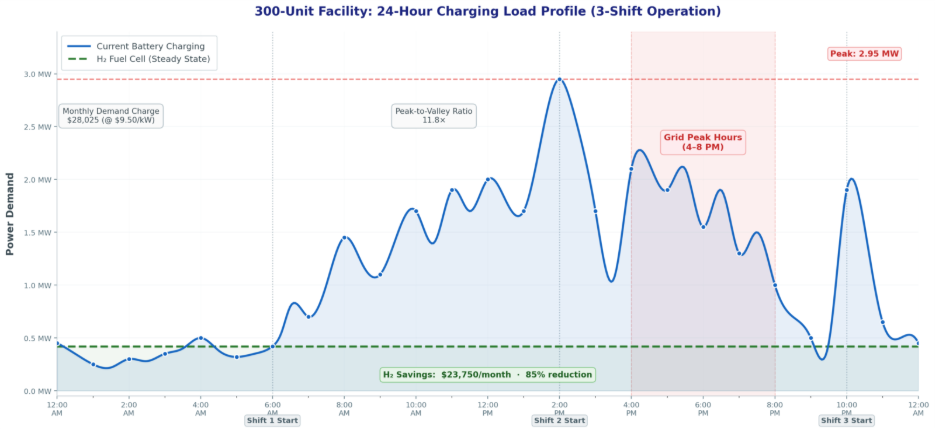
As more distribution facilities electrify in the same locations as other significant demands — pressure on the local grid compounds, further straining the already constrained infrastructure.
Hydrogen Fuel Cells: A Grid-Relief Solution
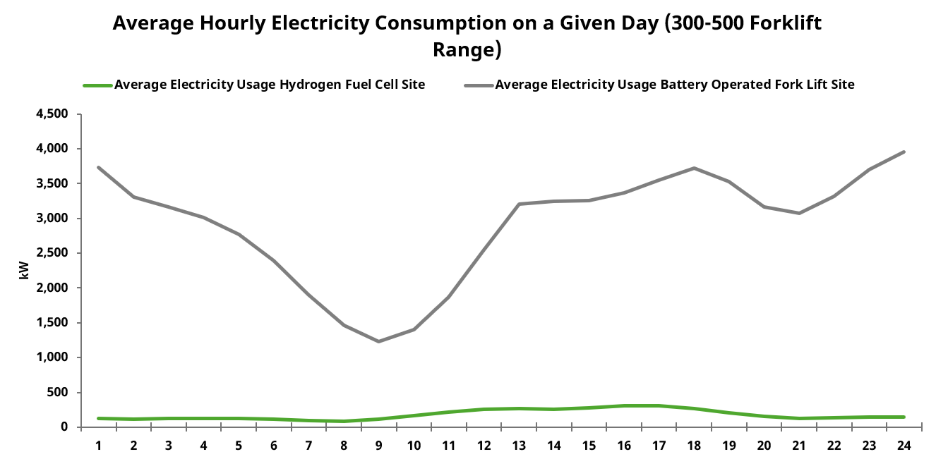
Hydrogen fuel cells are offering a solution that addresses our grid challenges head-on by stabilizing, supplementing, and strengthening power where it’s needed most. By converting industrial battery usage to hydrogen fuel cells, facilities can remove critical peak electricity usage while maintaining full operational capability.
The graph below shows the difference in electricity consumption between a fuel cell site and a battery-operated site.
Measurable Economic Impact for System-wide Benefits
Converting fleets to hydrogen reduces large, concentrated electricity demand during periods when the grid is under the most strain. An analysis by Plug of customer sites in the New York grid region (NYISO) shows that transmission congestion increases significantly during the time periods which coincide with industrial shift changes — times when many facilities charge batteries simultaneously. For large operations, this charging can require 4–5 megawatts of power at a single site during peak periods. When multiple facilities draw power at once, it contributes to grid congestion, higher electricity prices, and reliability risks.
By shifting these energy needs from the electric grid to on-site hydrogen refueling, facilities help reduce peak demand and ease pressure on local transmission systems. Drawing on operational data from its products and customer base, Plug estimates that transitioning from battery operated forklifts to fuel cell operated forklifts can generate anywhere from $360,000 to $1,000,000 in annual savings on electricity bills while supporting overall system reliability. This assumes a 2-5 MW reduction at a rate of $15/kW-month.
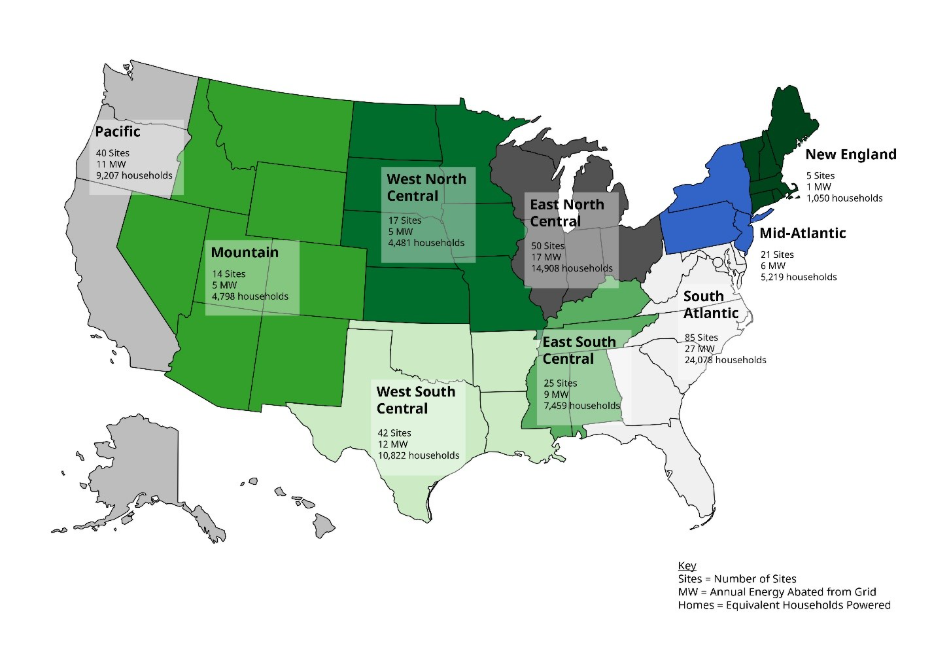
The broader impact of hydrogen deployment can be seen regionally. The map below highlights Plug’s fuel cell sites across the United States, showing the number of facilities in each region, the total megawatts of electricity demand reduced (all-inclusive of net site consumption), and the equivalent number of households that power could serve. Together, these installations demonstrate how individual site conversions translate into measurable reductions of electricity consumption — strengthening grid stability and creating system-wide benefits.
Operational Benefits That Keep Businesses Competitive
The advantage of hydrogen fuel cells is that they achieve these grid benefits without compromising the traditional operational benefits that make fuel cells attractive to businesses in the first place.
Consistent Performance and Productivity Gains
Battery-electric forklifts require 15–45 minutes of non-productive time per shift for charging, swapping, or opportunity charging. In large fleets, this adds up to hundreds of lost hours and tens of thousands of dollars in labor per forklift annually. Fuel cells, by contrast, refuel in 2–3 minutes and maintain full power throughout the shift, keeping throughput steady and operators productive.
Space and Infrastructure Optimization
Battery infrastructure consumes 10,000–20,000 square feet for charging rooms, safety zones, and spare battery space that could otherwise store thousands of additional pallets. Hydrogen fuel cells eliminate these requirements, freeing valuable facility space while reducing electrical infrastructure demands and peak demand charges.
Cost Savings and Total Value
Across large multi-shift facilities, total cost of ownership analysis shows that hydrogen fuel cells deliver 10–26% savings compared with battery-electric alternatives, rising to 35–40% in cold storage operations. Combined with the substantial grid-related value per facility, the economics of hydrogen adoption are compelling for both business and society.
A Dual-Win Opportunity
Hydrogen fuel cells demonstrate that operational efficiency and grid stability don’t have to compete; they can reinforce each other. Facilities maintain productivity, recover space, and reduce operating costs, while simultaneously relieving peak grid loads, stabilizing electricity prices, and supporting energy resilience.
With proven deployments exceeding 74,000 units (over 500MW in total), hydrogen fuel cells are ready today. They offer a path for businesses to do more than just power operations — they can actively support the electric grid that underpins modern commerce. By strategically deploying hydrogen fuel cells, industrial facilities can transform private operational advantages into public infrastructure benefits — a true win-win.
If you’re interested in understanding how hydrogen fuel cells could translate into measurable cost savings, operational gains, and grid-related value for your business, connect with our team to evaluate your operations and quantify the impact for your facilities. Contact us here!
To learn more, watch our in-depth conversation on hydrogen fuel cells, grid stability, and operational efficiency from last year’s Plug Symposium here.
The post Hydrogen Fuel Cells: The Smart Solution for Grid Reliability and Business Performance appeared first on Plug Power.